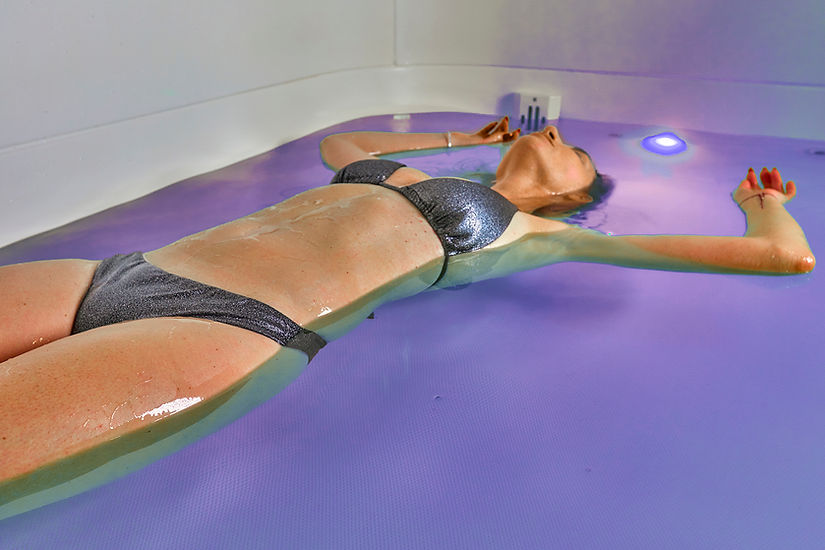
Our saltwater baths are used for both medical therapies and for relaxation and wellness. Scientific research has shown that floating reduces the production of stress hormones and significantly lowers (high) blood pressure. As a result, floating has a positive effect on stress-related issues, chronic pain, fatigue and overexertion. It promotes recovery, including after (intensive) exercise.
Floating is also recommended during pregnancy, if only to relieve the weight of your bump and the pressure on your spine.
Unfortunately, float therapy is not covered by health insurance. We therefore recommend opting for a float package. This will allow you to make the most of all the benefits that floating has to offer.
FLOAT THERAPY FOR:
-
Floating during pregnancy is beneficial for both you and the baby in your womb.
-
Floating calms your mind and provides relief from chronic symptoms.
-
Floating speeds up recovery after exercise and helps you focus better during sporting competitions.
-
Floating provides mental and physical respite for those suffering from depression and burnout.
-
Floating helps to alleviate side effects and promotes a return to balance following cancer treatments.

PREGNANCY
Floating is particularly beneficial when you’re pregnant. The sensation of weightlessness means you don’t feel the weight of your bump for a while. This is very soothing for the spine, which is under strain during pregnancy. Floating also stimulates blood flow to your muscles, which helps to alleviate the heaviness in your legs or any restless legs syndrome you may be experiencing. During pregnancy, your body’s magnesium levels drop significantly. So it’s a good idea to get a boost of magnesium by floating in the magnesium-rich water in our floatation tanks.
It’s not just your body that recovers whilst floating. Your state of mind also becomes calmer, as your brain is given a break from stimulation. This can strengthen the bond with your baby. Whilst floating, you become more aware of your unborn baby. You’re both in the same state: your baby in the amniotic fluid and you floating in the warm water of the float room.
Floating is also beneficial after pregnancy. Following a period of significant physical exertion, floating can help your body recover. After the birth of your baby, you may experience sleep deprivation, or this may even have started during your pregnancy. Floating is recommended to combat the fatigue caused by sleep deprivation: one hour of floating is equivalent to the recovery gained from five hours’ sleep.
CHRONIC SYMPTOMS
Chronic conditions such as rheumatism, fibromyalgia, MS, chronic bowel disorders and psoriasis are conditions in which the nervous system becomes overstimulated.
The constant stimuli from the body cause the brain to work overtime to manage the pain. This overtime causes the brain to become tired and overstimulated, which in turn can lead to further symptoms. Floating helps to calm the brain. This happens because stimuli such as gravity, light and sound are eliminated during a float session. As a result, the brain has far fewer stimuli to process and is able to rest.
This rest in the brain then triggers the production of certain hormones that promote recovery. We can therefore say that one hour of floating is equivalent to the recovery you get from five hours’ sleep.
DEPRESSION AND BURNOUT
With both depression and burnout, you have been pushing yourself too hard for quite some time. Too much stress and too little recovery can lead to a situation where too much is demanded of your body and mind.
This can lead to overstimulation of the brain, preventing your recovery system from functioning properly. The limbic system – the part of the brain that regulates, amongst other things, your anxiety and emotions – can also become overstimulated. Floating helps to de-stimulate the brain, allowing it to recover more effectively. A float session gives you the mental peace you’re looking for, helping you cope better with the hustle and bustle of the day. With these kinds of issues, more support is often needed. Do take a look at our therapeutic centre, LEEF!, for additional programmes to combine with floating. If you’ve already started a therapeutic programme elsewhere, floating is an excellent addition.
ONCOLOGY
When someone is told they have been diagnosed with cancer, their world comes crashing down. They find themselves on an emotional rollercoaster whilst having to make all sorts of decisions about the treatments to follow. Relationships with those closest to them often change. Once standard treatments begin, you have to cope with all sorts of side effects that also have a huge impact on your physical and emotional well-being.
Even after all treatments have finished and you’ve been declared healthy for the time being, you’re certainly not back to normal yet. You still need to come to terms with everything that has happened over the past weeks, months or years. Floating can help you regain your balance more quickly after treatment. Floating can also help reduce the severity of side effects during treatment. This is because the brain is desensitised during a float session. As the brain receives fewer stimuli, it can regain balance through various hormonal processes taking place in your body. These are processes that normally occur whilst you are asleep. They facilitate the recovery of both body and mind.
If you’d like more information or are unsure whether floating is a good option for you at the moment, please feel free to contact us. In addition to floating, we offer specific programmes focused on oncology at the LEEF! therapeutic centre. Please feel free to ask us about them or take a look at www.leefmaastricht.nl.
STRESS
Everyone experiences a certain degree of tension and alertness in their body. This is actually a good thing, as it ensures you can spring into action in threatening situations as soon as necessary. Stress can boost performance and keeps your mind resilient and alert. So stress is not always unhealthy. We all need a certain amount of stress to be able to respond appropriately to situations.
This healthy level of stress must be balanced by sufficient recovery. This means rest and effective relaxation both during the day and at night. Stress becomes unhealthy when an imbalance persists over a longer period. This happens when too much is demanded of you for too long, whilst at the same time there is insufficient time to relax. Stress can then take on a chronic form.
Chronic stress can lead to a tense and frantic feeling. You are constantly ‘switched on’ and find it harder to switch off. Your heart rate increases and you unconsciously tense your muscles more. You sleep less well and may feel restless or even anxious. You are irritable and recover more slowly – or not at all – from physical ailments.
Floating provides the recovery you so desperately need in this situation – both mentally and physically. By removing external stimuli, your brain is given a chance to rest, which in turn promotes physical recovery. All sorts of hormonal changes take place whilst floating, changes that normally occur during the night. Floating also reduces levels of the stress hormone cortisol. As a result, after just a few sessions, you’ll already feel much calmer and less tense.
BOOK A FLOAT THERAPY SESSION
STRIP CARDS
Multi-session strip cards for affordable and regular floating and/or Mindzone sessions.
From € 172,00
Buy a 4- or 10-session strip card if you come for float sessions regularly, or buy a 10-session pass for the Mindzone to help your mind unwind.